
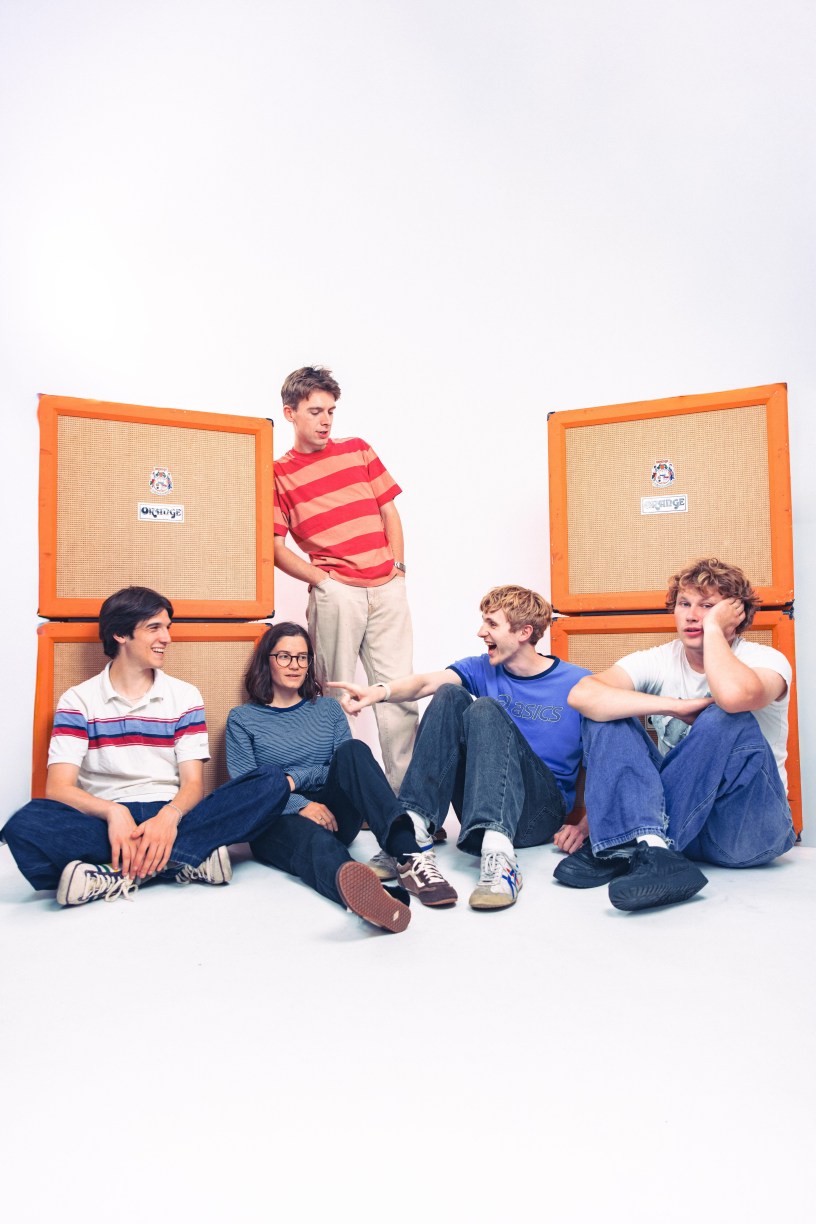
Photo Credit: Press / Words: Kate Warby
The Brixton Windmill provided the setting for Welly’s latest London appearance, with the packed pub venue offering an intimate environment for a band whose music and wider identity seem to thrive on audience connection. Drawing on the likes of Pulp, The Kinks and Paul Weller, there is a distinctly British character to Welly’s sound, combining upbeat, danceable instrumentals with a more observational approach to songwriting. Much of their appeal comes from the way they turn everyday British life into something worth singing about, often approaching familiar suburban experiences with a sense of humour that gives their music a personality of its own. This combination of infectious energy and witty lyricism gives the band an identity that feels particularly suited to a live setting.
From the outset, the close proximity between the stage and crowd created an atmosphere where the conventional divide between performer and audience felt almost non-existent. Within a venue as intimate as the Windmill, there is little room for the two to remain separate, something that became increasingly apparent as the evening continued.
Opening with an unexpected choice in the form of Édith Piaf’s ‘Je ne regrette rien’, the band established an interesting introduction before moving into their own material. The set quickly developed into a more energetic affair, with the upbeat nature of their music bringing the room to life and encouraging the audience to become increasingly involved. This balance between lively, infectious moments and the more measured sections of their performance allowed the evening to develop naturally rather than relying on one consistent level of intensity.
One particularly striking aspect of the performance was the relationship between the band and their audience. The close-knit nature of the venue allowed the two to become increasingly connected, with guitars being lifted above the crowd and fans gathering closely around the musicians. Rather than simply watching a performance unfold, the audience appeared to become an active part of it. This is something that smaller venues can offer particularly well, creating an environment where the distance between artist and fan is reduced and individual moments can feel far more personal.
The band’s set also offered enough variation to prevent the evening from becoming predictable. The more upbeat tracks brought a noticeable shift in energy throughout the room, whilst the slower moments provided an opportunity for the audience to take in the music from a different perspective. This contrast helped maintain the momentum of the performance, allowing the band to move between different moods without losing the connection they had established with the crowd.
Beyond the performance itself, there was also a wider sense of shared purpose that appeared to run through the evening. Welly’s attitude towards their audience suggested that their relationship extends beyond simply entertaining those who come to see them, instead reflecting a connection built around something more meaningful. This sense of community added another dimension to the performance, reinforcing the idea that live music can provide a space for people with shared outlooks to come together.
With the Brixton Windmill providing such a close-knit setting, the evening offered an opportunity to see Welly in an environment where the connection between performer and audience could take centre stage. The combination of an eclectic setlist, an involved crowd and the band’s wider identity made for an appearance that reflected the importance of community within their music.

