
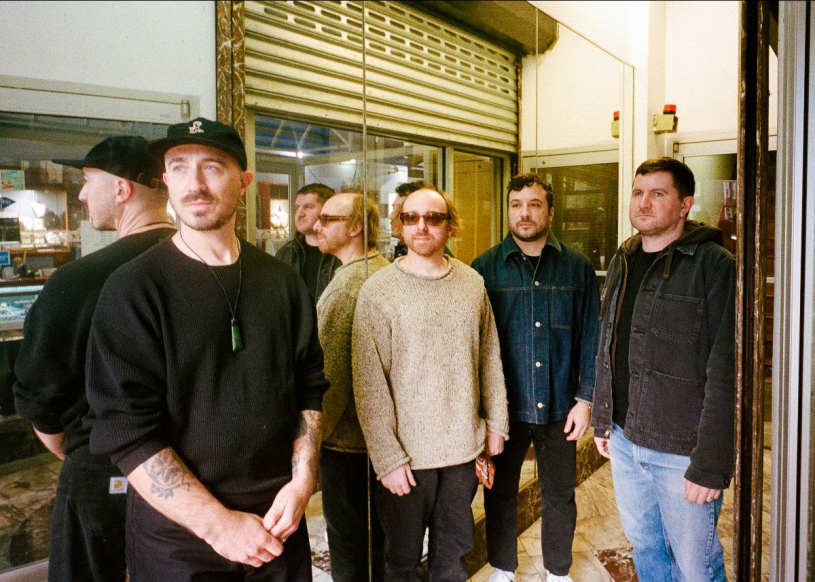
Photo Credit: POND Creative
Words: Cara Clarke
Scranton, Philadelphia Punk band The Menzingers released their eighth album ‘Everything I ever Saw’ on July 17th corresponding with the beginning of their 2026 US tour in New Jersey.
Three years in the making, the band members Greg Barnett (vocalist/guitarist), Tom May (vocalist/guitarist), Joe Godino (drums) and Eric Keen (bass) developed new tracks alongside producer Will Yip in Southern Philadelphia. During this time they underwent a series of major life events including marriage and parenthood for Greg Barnett and the divorce of Tom May and his wife. Consequently the band appear to have undergone a spiritual metamorphosis, forming experienced perspectives and new intentions which have manifested in 11 new tracks.
Talking about the album Barnett said: “I want to be able to appreciate, understand, and love everything that we’ve done, as well as where we’re going,” he says. “It’s going to define who we are for the rest of our lives.”
Summary
The album as a whole is clearly marked by hardship, wading through feelings of regret and despair whilst exploring the strengthening effects of long-term companionship. In its entirety the music appears to accept life in its for all its highs and lows, avoiding the all too popular gaze of rosy false optimism.
With a run time of 38 minutes 34 seconds the band reflect on their lives together and explore the core experiences that shape perception throughout the album. The music seems to form a microcosmic lifecycle beginning with the spontaneity of youth, progressing into hardship and perseverance and finishing on a note of acceptance.
Themes
Spontaneity / Authenticity
Looking at life for all its good and bad The Menzingers give weight to the importance of ‘going with the flow’ and always being true to themselves and others.
Track 1: ‘Chance Encounters’
Kicking off the album with an electric start, ‘Chance Encounters’ represents these values. Setting the tone with an intense tempo and raw lyrics characteristic to the band The Menzingers appreciate the unplanned moments out of their control that changed and shaped their lives forever.
One reference appears to harken back to the band’s formation in their early days, reading, “Found each other in our worst ways everything was going gone // all the drugs we took for breakfast couldn’t convince us nothing’s wrong,”. In combination with the chorus lines, “If we tell each other secrets, even the dark parts that don’t glow // maybe life could feel a little less alone,” the song clearly drives a core message that values spontaneity and shared experience.
Of course ‘Chance encounters’ also draws on other unscheduled events as Barnett said, “I met my wife when I was 15. We were in line for a show in Wilkes-Barre, and now we have a child together. It’s those chance moments that set your life on such an insane course.”
References to a higher power and fate are threaded throughout the lyrics reinforcing the revelation that life is out of our control so it’s important to make the most of our experience.
Track 7: ‘Nobody’s Heroes ‘
‘Nobody’s Heroes’ builds on the previous understanding of life’s fleetingness and shared experiences but takes an inward shift. The song continues the theme that it’s important to live life to its fullest utilising an uplifting tone and humorous takes such as “Just can’t make this shit up gotta keep your head up,” reminding the listener they don’t owe anybody anything or any version of themselves.
This is particularly reinforced in the music video where the lyrics “2020 hindsight” cleverly align with the ironic onscreen wording “is it 2020 yet” projecting the reality that you don’t know what life will bring and should live life the way you want to or you’ll regret it when you can’t.
Barnett described this song as an, “anthem for everything that we’ve been through, while shining a light on the connection that we have together.”
Political Observations
Track 2: ‘Better Angels’
According to the band, ‘Better Angels’ found its namesake in Abraham Lincoln’s First Inaugural Address. The song takes a stance on politics from a humane perspective noting the suffering happening across the world.
May said: “The song is about trying to stay human when the worst parts of humanity are showing its face. This oligarchical, blatantly corrupt, and self-serving administration is costing people their lives and livelihoods, and there’s a division that exists. If we’re going to get through all this, we have to bring people in and see the humanity in someone else. Appealing to the part of yourself—that’s the better angel.”
The track itself opens with ‘heavenly’ sound effects broken by the chaos of the drums and guitar as the lyrics “I know heaven ain’t a place that you can go” play, reinforcing The Menzinger’s political observations.
Track 4: ‘Other Peoples Money’
There are many political references here, this song in particular seems to bash capitalism, including corporations and wealthy political figures who play the everyday person for money.
Lyrical references to this include going to outer space “to save the human race / pocketing salvation as a service” and “ain’t no money in the trove // they’ll sell you back your youth”.
The upbeat idyllic melody and chorus line “ain’t it funny, taking other peoples money // la dee da” creates a deeply ironic and darkly comedic reenactment of the current political diet.
Regrets
Track 3: ‘Romanticism’
‘Romanticism’ is a declaration of love formed by a montage of memories. The lyrics, “I spent so much time unsatisfied / hiding in my miserable self” reveal a deep regret that the singer has taken so long to confess his feelings. Accompanied by the chorus line, “For too long we were dancers in the dark // two separate parts” reinforces the message that life is too short to not face the truth and tell others how you feel.
Despite the heavy tempo the track slows in the chorus as the menzingers sing “All that is and all that never was don’t mean shit to us now” portraying a sense of nostalgia and intense love perhaps representing the singers realisation and subsequent confession that overrode the previous regret and ‘misery’.
Track 6: ‘The Fool’
‘The Fool’ explores feelings of regret about your own actions and unhealthy coping mechanisms e.g. “I’ll be drinking till the sun explodes” . The singer expresses an inability to commit in the opening line, “I only like the beginning of things” and goes on to explain that he is constantly making mistakes. The lyrics, “I am the dreamer I’m a believer, self deceiver I ain’t no keeper // some day I swear I’ll call you back”, suggest that he is always chasing something better, ironically missing out on the good life that’s right in front of him.
The Menzingers take a deeply unserious tone with this track creating a nuanced self-deprecating reflection.
Companionship
Possibly the most prominent theme throughout this album The Menzingers reflect deep connection with those around them and on the strength that can be found there.
Track 8: ‘Breathe with me’
To put it simply this track paints human connection as a lifeline. The chorus lyrics “Breathe with me and come ever often // bring me back to shore” form a metaphor for drowning and being saved from the ‘growing darkness’ by human connection. Accompanied by an idyllic melody this track is a celebration of close long-term companionship.
However, The Menzingers take emphasise the importance of seeking that help from one another e.g. “Unless we try, we cry // we’re stranger to the sky”.
Track 9: ‘When She Enters My Dreams’
This song celebrates feelings of completeness and identity that accompany romantic companionship. Littered with teenage ideas of romance ‘When She Enters My Dreams’ tells a story of old school love and the joy of finding yourself in someone else, “And we meet ourselves in the eyes of one another”, after years of feeling out of place e.g. “I spent so many years wishing I was anyone else // I never fit like a glove,” The Menzingers recount straightening their ties, practising their lines and “throwing rocks up at your window for forever and a day”, in a celebration of honest and fulfilling relationships.
Track 10: ‘Parade Day’
‘Parade day’ is a heartbreaking track which relates the experience of losing someone you love, perhaps through divorce or death, the lyrics do not define what kind of loss. The singer is haunted by memories of his lover, “I miss you in the morning // I speak to you at night”,
whom he has a child with and speaks to her, promising to see her again “at the end of time”
.
The message of the song appears to reference the nuances of human connection which cannot ever truly be broken. Again The Menzingers take a jubilant tone with this song, drawing focus to the precious nature of human connection rather than the heartbreak and regret that often ensues.
Acceptance
The Menzingers explore the acceptance of both their present and their past.
Track 5: ‘Gasoline and Matches’
‘Gasoline and Matches’ appears to double as a message to their younger selves as well as each other in the present. The opening line, “Tell the kid in you that it’s ok // you don’t have to have it all figured out without a shadow of doubt” looks towards their past selves with reassurance as well as their present worries.
The core message of the song reminds the listener that you should slow down and accept the past rather than punishing yourself for things you can’t undo. Evident in the softened tone of voice and chorus line, “Youre burning everything to the ground quit fucking around // with gasoline and matches and shit you can fix // come down from your crucifix”
Track 11: ‘Everything I Ever Saw’
The title track ‘Everything I Ever Saw’ marks the ending of the album, this position amplifies the message of the song as it looks back both lyrically and physically over the band’s life represented by the previous songs.
‘Everything I Ever Saw’ is more complacent and upbeat in comparison to the opening track ‘Chance Encounters’ suggesting an emotional shift and a newfound acceptance for the lives they have lived. The lyrics “I wish I could remember everything I ever saw // I take the good with the bad, the happy with the sad // every stranger’s face that’s walked on by,” express a deep want to hold onto every pocket of knowledge and memory, recognising the importance of remembering the little things.
However, this song breaks the stereotypical longing gaze to the past by reinforcing that the singer has no desire to go back in time in the chorus line, “I don’t want to relive I just want to remember”.
End Note
The album ‘Everything I Ever Saw’ marks a turning point in The Menzinger’s music particularly in comparison to the ingrained pessimism and slowed down beat of their 2023 album ‘Some Of It Was True’.
Now showing a deeper wisdom, acceptance and political consciousness that only develops over time, The Menzingers have created a catchy collection of raw and authentic songs that deliver deep personal experience on a universally relatable scale, resonating with listeners from any stage of life.

